
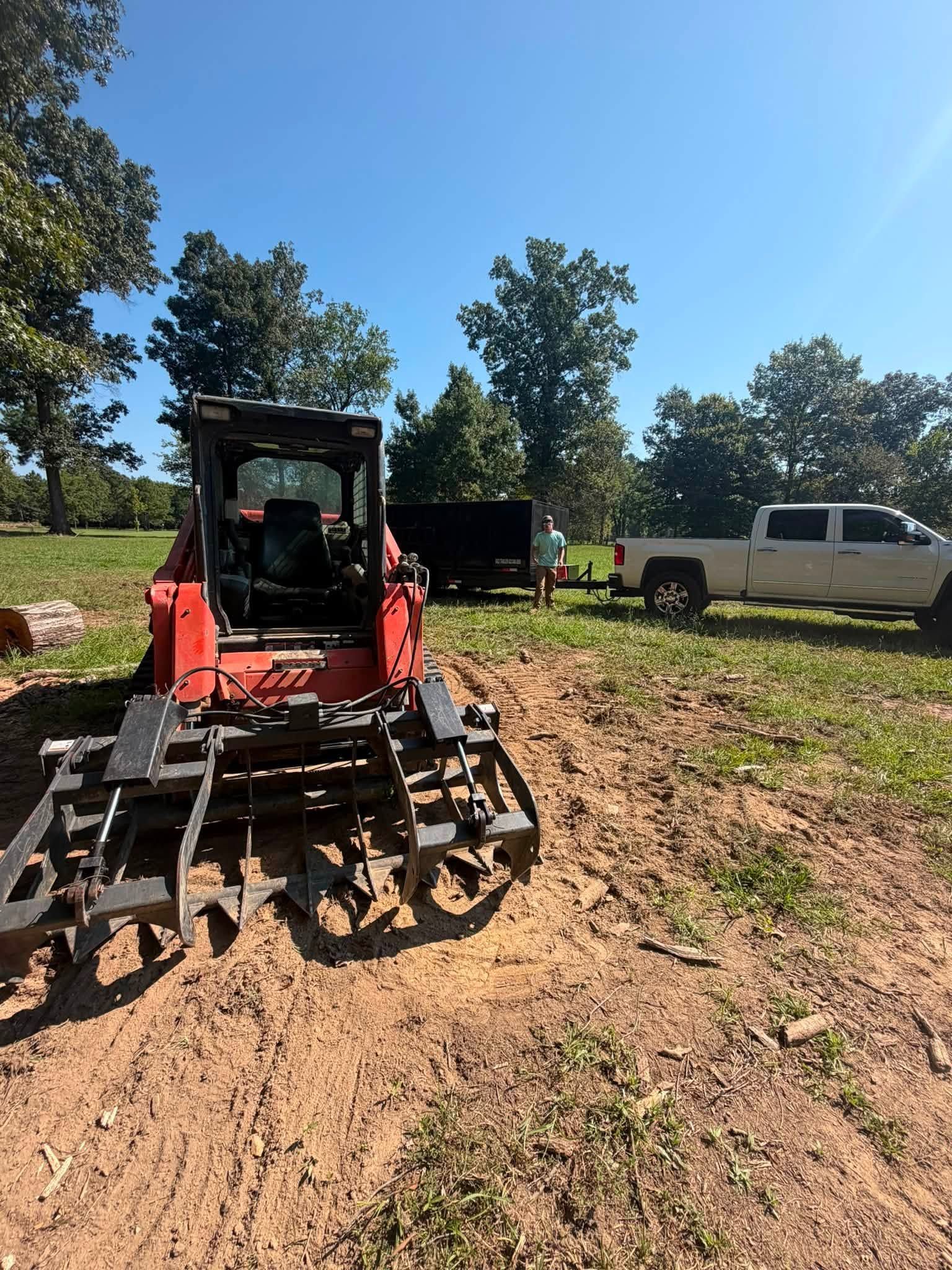
Properties Cleared and Graded for Construction Access
Land clearing in Lyerly for residential and commercial sites where overgrowth, debris, and uneven terrain prevent development or equipment access
Development patterns in Northwest Georgia often involve wooded or overgrown lots that require tree removal, brush clearing, and rough grading before construction can begin or property boundaries become usable. Rock Solid Exterior LLC clears land for residential and commercial projects across Lyerly and Floyd County, managing tree assessment and removal, stump grinding, debris hauling, and grading prep for sites ranging from single-family lots to multi-acre commercial parcels. Seasonal weather affects equipment access when winter rains soften soil or sporadic frost creates ground conditions that limit heavy machinery movement, so project timelines account for realistic weather windows rather than fixed schedules that ignore local climate patterns.
Tree assessment identifies which vegetation must be removed for building envelopes, access roads, or utility corridors, and which can remain to meet setback or conservation requirements. Stump grinding eliminates root structures that interfere with foundation work or underground utilities, and debris hauling removes material from the site rather than burning or stockpiling it in ways that delay construction timelines. Rough grading establishes initial slope and drainage patterns, though final grading typically follows later in the construction sequence.
Arrange a site survey to determine clearing scope and discuss grading requirements based on your development plans.
What Proper Land Clearing Requires
Land clearing begins with a site survey that maps existing vegetation, identifies protected species or conservation zones, and establishes clearing boundaries aligned with building plans or property use goals. Equipment selection depends on terrain, tree density, and access constraints, with smaller lots requiring different machinery than multi-acre parcels where efficiency and reach determine project pace.
After clearing is complete, you'll see defined boundaries where overgrowth once obscured property lines, level or graded surfaces ready for construction equipment, and clear sight lines that reveal topography and drainage patterns previously hidden by vegetation. Stumps are ground below grade so they don't interfere with foundation work, and debris is removed entirely rather than left in piles that become fire hazards or breeding grounds for pests.
The service is scoped per site survey, with timeline and cost determined by acreage, tree density, and grading complexity rather than a fixed hourly rate. Wintertime frost and wet ground conditions can extend timelines when soil becomes unstable or equipment access creates ruts that require additional grading, so scheduling communicates realistic windows based on seasonal patterns observed across the Rome and Cartersville areas. The four-person crew manages operations with owned equipment, eliminating subcontractor delays that can stall projects waiting for coordinated scheduling.
What Property Owners Usually Ask
Developers, builders, and property owners preparing land for construction or improved use often need clarity around clearing scope, debris management, and how local weather conditions affect timelines and equipment access.
What happens to debris after trees and brush are removed?
Material is hauled off-site to disposal facilities rather than burned or left on the property, ensuring compliance with local ordinances and preventing delays caused by debris piles blocking construction access in Lyerly and surrounding areas.
How deep are stumps ground below grade?
Grinding typically extends six to twelve inches below finish grade, deep enough to prevent interference with foundation footings, septic systems, or underground utilities without requiring excavation that destabilizes surrounding soil.
Why does land clearing cost vary so much between properties?
Tree density, terrain slope, access constraints, and soil conditions all affect equipment requirements and project duration; a flat, sparsely wooded lot clears faster and costs less than a heavily forested hillside with limited equipment access.
When is the best time to schedule land clearing in Northwest Georgia?
Spring through fall offers the most predictable ground conditions, though winter work remains possible when soil stays firm enough to support equipment without creating ruts that require extensive repair grading.
What's included in rough grading versus final grading?
Rough grading establishes general slope and drainage direction after clearing, while final grading creates precise elevations and surfaces ready for paving, landscaping, or foundation work—usually handled later in the construction sequence.
Rock Solid Exterior LLC has cleared residential and commercial sites throughout Floyd County for over three years, managing tree removal and grading with a four-person crew and owned equipment that eliminates dependency on subcontractor availability. Contact the company to schedule a site survey and receive a clearing scope based on your property's vegetation and development goals.